

ORDER NOW
The Sanskrit word mandala can be translated as "sacred circle." Within the circle sits a microcosm of the universe and/or consciousness, repre-sented by icons. Eastern civilizations developed the spiritual-artistic practice of creating mandalas—with sand, paint, and architecture—to high technical sophistication, making manifest a geometry with layers of esoteric meaning for both the mandala artist and the initiated spectator. James Joyce’s Mandala outlines and explains this iconic sacred geometry, and assesses to what extent Joyce’s works of literature, in particular Finnegans Wake, can be understood as mandalic constructs. Using exam-ples from Dubliners to the Wake, we see how fundamental to Joyce’s fiction is the issue of spiritual paralysis (a problem the mandala attempts to dissolve) and also how fascinated he was by geometric imagery and symmetry, the technical devices employed in mandala construction. This is the first book-length comparison of Joyce’s work with the mythic structure of the mandala. Never discounting the richness of Joyce’s genius, it uses his "collideorscape" to explore the secrets of the mandala principle as much as it uses mandala theory to illuminate his famed book of the night.

ORDER NOW


Claiming De Wayke (Crossroad Press, 2022)
What would you do if someone offered you the keys to a limitless reality?
Tayto is a saint—someone addicted to their VR halo. He’s uneducated, unmotivated, and loath to quit his habit and embrace the real world: the Wayke. When the mysterious Zeke Zohar contacts him, offering him a chance to be raptured into a VR paradise forever, it seems too good to be true. The catch: Zeke believes this chance hinges on them finding Tayto’s genius brother, and his plan involves journeying to Tayto’s childhood home, navigating the detested Wayke in the process.
For all the weirdness of the VR universe, it’s the real world that Tayto finds truly strange. His journey forces him to confront a gang, a cult, and the two great questions that addicts often face: Is it possible to come home? Is it possible to escape from it?
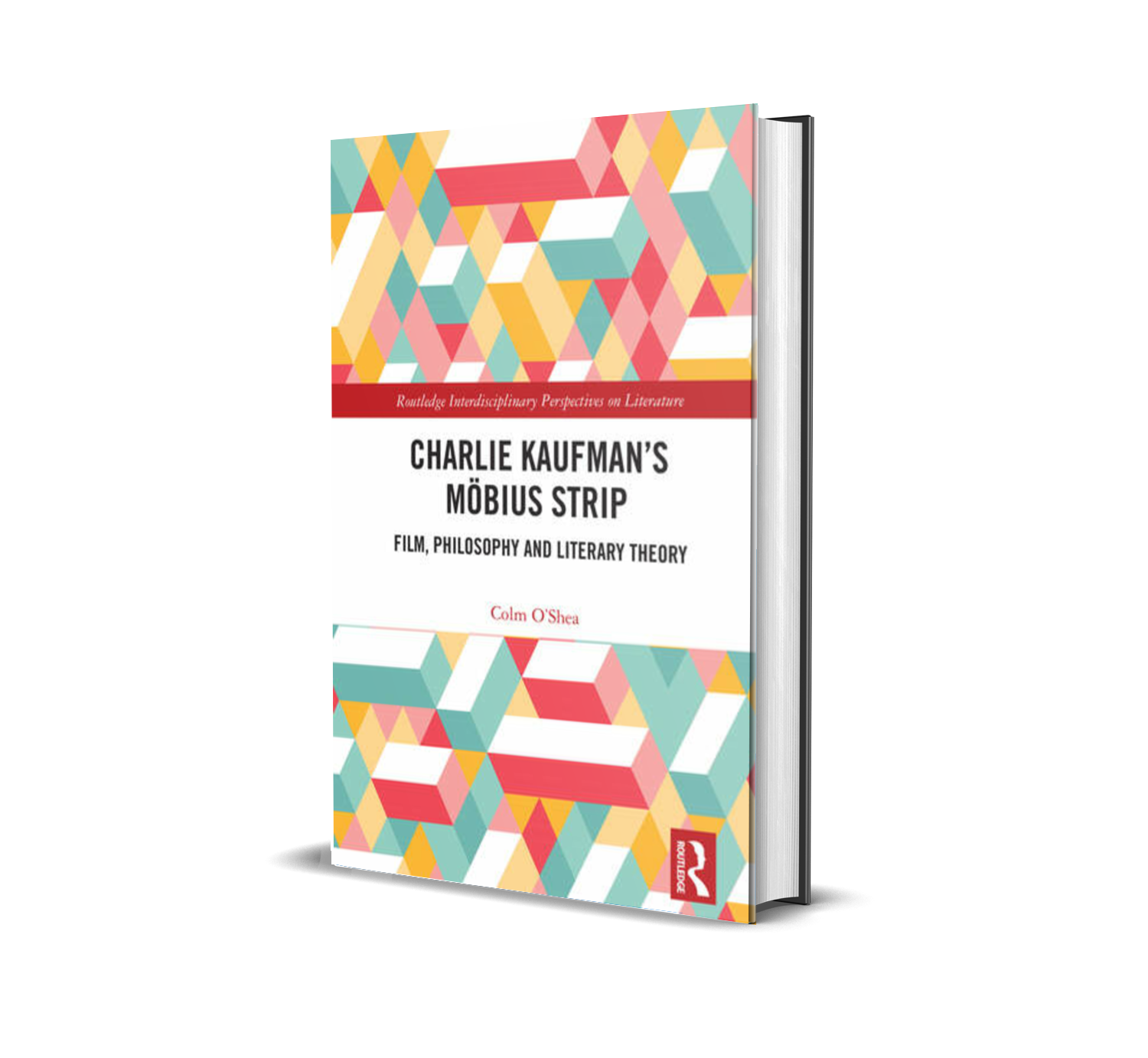
Charlie Kaufman’s Möbius Strip: Film, Philosophy and Literary Theory presents Kaufman’s diagnosis of alienation and corruption in the modern age as a fundamentally spiritual malady.
Each chapter builds on a theological or metaphysical idea, drawing from thinkers as diverse as Kierkegaard, Kafka, Wittgenstein, and David Foster Wallace, along with spiritual insights from the Talmud, Tibetan Buddhism, and Christian mysticism. This isn’t to sell the notion that Charlie Kaufman is a covert religious thinker of any particular stripe. Instead, the book reveals how, behind the surreal whimsy, playfulness, and absurdity of his fictional universes, Kaufman’s films collectively present an accurate anatomy of contemporary despair or broken heartedness.
Kaufman’s critique engages in what this book terms a “meta-modernity”—a dual mode that oscillates from postmodern irony to sincere engagement with human suffering and angst. The Kaufmanesque text is openly vulnerable and guarded, direct and oblique, playful and lamenting. This book offers an essential guide to understanding Kaufman’s unique cinematic vision and its profound engagement with the spiritual crises of our time.